Our Services
We do design, service installation, testing & commissioning, and maintenance of the following type of cranes.

Monorail Hoist
A Monorail Hoist, often referred to simply as a crane, is a type of lifting device used to move heavy loads vertically and horizontally. It consists of a raised frame or tower, which is supported by either a stationary base or mounted on a vehicle or other mobile platform. Hoist cranes are widely used in construction sites, manufacturing facilities, shipping ports, and other industrial settings where there is a need to lift and transport heavy objects. By rotating the drum or operating the pulleys, the hoist can raise or lower the load. The lifting capacity of a hoist crane can vary widely, ranging from a few tons to several hundred tons or more, depending on the specific design and application.
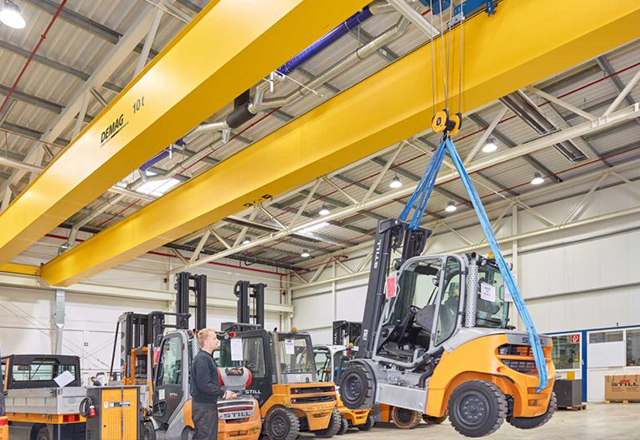
Overhead Crane
An overhead crane, also known as a bridge crane or an overhead traveling crane, is a type of crane that operates on an elevated track or runway system. It is designed to lift and move heavy loads horizontally within a specific area, typically in industrial settings such as factories, warehouses, and manufacturing facilities. The basic structure of an overhead crane consists of a bridge that spans the width of the working area and is supported by end trucks on either side. The bridge is equipped with a hoist, which is the lifting mechanism used to raise and lower the load. The hoist is connected to a trolley that moves along the length of the bridge, allowing the crane to transport the load to different positions.
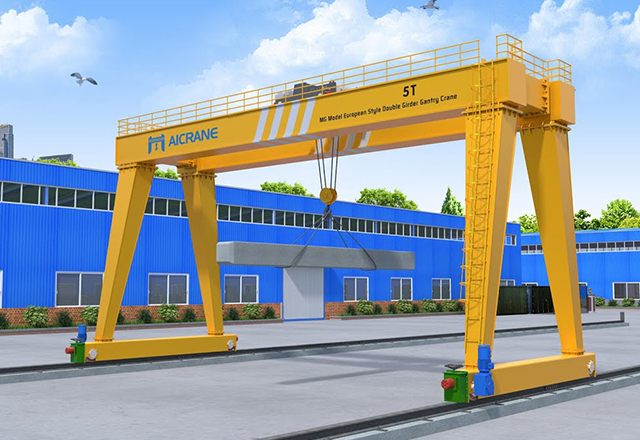
Gantry Cranes
Gantry cranes are a type of crane that is supported by a framework of legs, allowing it to move along the ground or on rails. They are commonly used in various industries, including construction, shipyards, container terminals, and manufacturing facilities, where heavy loads need to be lifted and moved.
Gantry cranes come in various configurations, including single girder and double girder designs. Single girder gantry cranes have one horizontal beam supporting the hoist and trolley, while double girder gantry cranes have two horizontal beams for increased lifting capacity and stability.
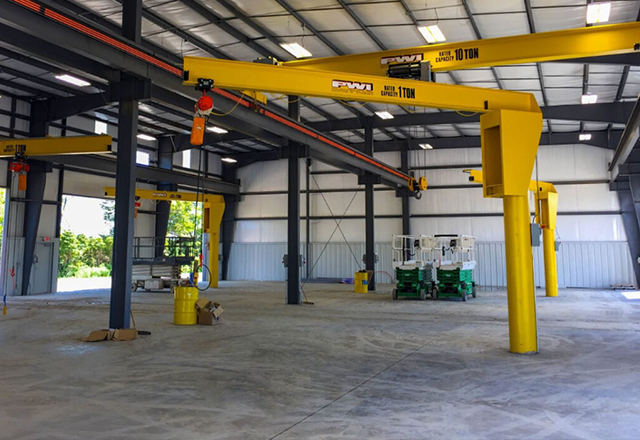
Jib Crane
A jib crane is a type of crane that features a horizontal arm, known as a jib, which is attached to a vertical mast or pillar. The jib arm can rotate on its support structure, allowing the crane to provide horizontal lifting and movement capabilities within a limited area. Jib cranes are commonly used in industrial settings, workshops, construction sites, and warehouses for various lifting and material handling tasks.
Jib cranes come in various configurations, including wall-mounted jib cranes, floor-mounted jib cranes, and freestanding jib cranes. The choice of configuration depends on factors such as available space, load capacity requirements, and the specific application.
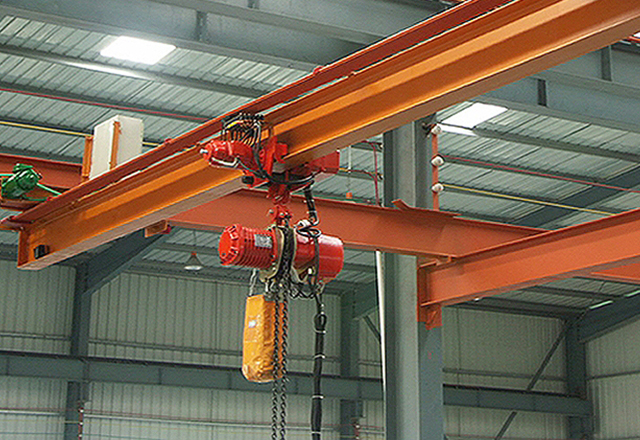
Underslung Crane
An underslung crane, also known as an underhung crane or underslung overhead crane, is a type of overhead crane that has its end trucks or trolleys positioned beneath the runway beams or support structure. Unlike traditional overhead cranes where the end trucks are positioned on top of the runway beams, underslung cranes are suspended from the runway beams, allowing for increased lifting height and better utilization of available space.
Underslung cranes are commonly used in manufacturing facilities, warehouses, and production areas where there is a need for efficient material handling and lifting operations. They are suitable for a wide range of applications, including assembly lines, loading/unloading stations, and workstations with limited headroom.
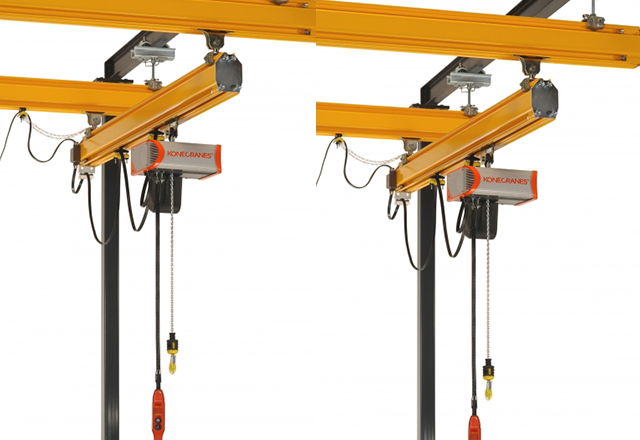
Light Crane System
A light crane system, also known as a light-duty crane system or lightweight overhead crane system, is a type of crane designed for handling lighter loads in a wide range of industrial and commercial applications. It is a modular and flexible crane solution that consists of lightweight components, allowing for easy installation, mobility, and versatility.
Light crane systems are commonly used in smaller workshops, assembly lines, warehouses, and production areas where the lifting requirements are relatively lighter. They are suitable for tasks such as material handling, equipment maintenance, and small-scale manufacturing processes. The advantages of light crane systems include their cost-effectiveness, ease of installation, versatility, and ability to be customized to specific needs. They provide efficient and ergonomic lifting solutions for lighter loads while requiring minimal space.